2026 Food Planet Prize finalists announced
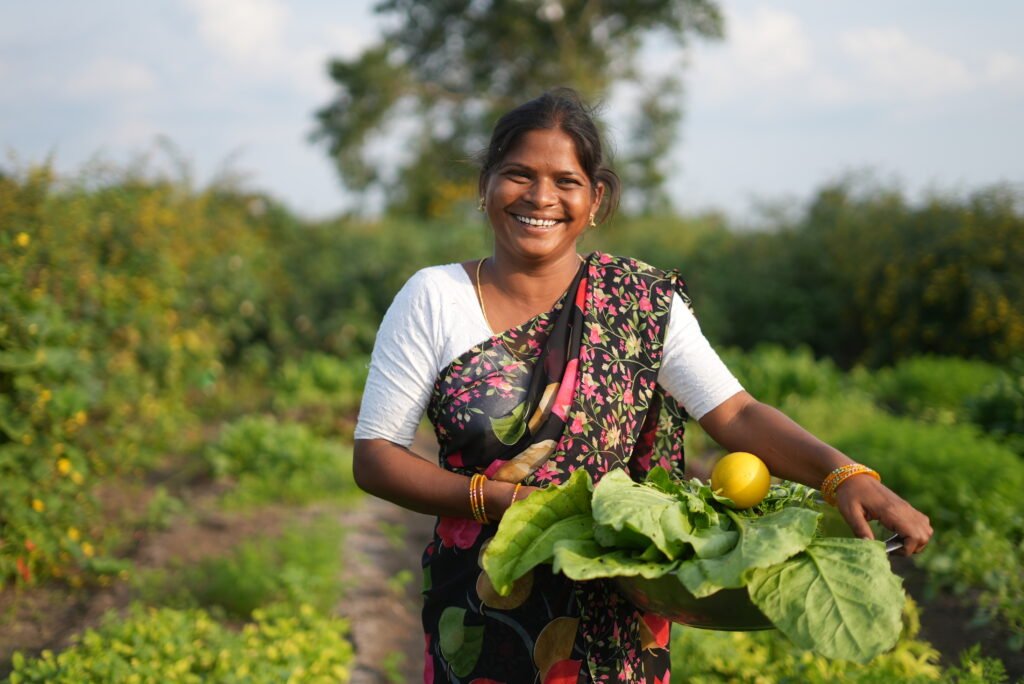
Amulya Sarvapalli of Andhra Pradesh Community Managed Natural Farming.
May 29, 2026 - We need a little good news at the moment, and the four finalists for “the world’s biggest environmental prize” – the 2026 Food Planet Prize – are delivering it in truckloads. The four finalists have been selected from more than 1000 nominations worldwide, and even just as finalists they each receive $150,000. The winner, to be announced on June 2 in Båstad, Sweden, will be awarded $1.5 million.
The Food Planet Prize was first awarded in 2024 by the Curt Bergfors Foundation, which was established in August 2019, “in acknowledgement of the perils that our current food systems post to the health of people and the planet, and with the conviction that the ways we produce, distribute, and consume food must be radically and urgently reformed” if people and planet are to survive and thrive. The foundation’s founding capital came from “Curt’s private assets,” the website says.
This year’s finalists hail from India, the Netherlands, and two from the United States:
Andhra Pradesh Community Managed Natural Farming (APCNF), India: Launched by the government of the southern-Indian State Andhra Pradesh, this community initiative works through women’s collectives and a network of more than 10,000 trainers who work with smallholder farmers to adopt natural farming practices and abandon synthetic inputs. More than one million farming families have joined the initiative, across more than 8,000 villages.
Conscious Kitchen, United States: The California-based Conscious Kitchen began as a pilot project in 2013, launched by founder Judy Shils. Today it is a thriving school-meals enterprise aiming to transform how public schools across California source and serve food. At the moment, America’s schools serve more than 30-million meals a day, most of them nutritionally inadequate, and consisting of prepackaged, ultra-processed products. Five million of these meals are served in California schools alone (breakfast and lunch), on a $4.8-billion budget. Conscious Kitchen is transforming this supply-chain infrastructure by connecting school districts with nearby organic farmers, to source fresh local foods, and training school nutrition teams to cook from scratch. [add numbers?]
NoPalm Ingredients, Netherlands: It is no secret that palm oil is everywhere (in nearly 50% of packaged supermarket products) and that the methods of palm oil production have driven carbon emissions, biodiversity loss and tropical deforestation. NoPalm Ingredients has created an eco-friendly alternative – a precision-fermentation ‘oily’ yeast, made from existing food-industry waste such as potato peels and by-products from dairy. This alternative to palm oil requires no changes or reformulation of existing recipes, and it can be produced alongside existing food processing facilities, which minimizes carbon emissions produced by transportation.
The Savanna Institute, United States: This institute in the United States’ “breadbasket” Midwest is working with a national alliance of more than 220 organizations, to help more than 400 farmers establish agroforestry in the area, to try and enrich an environmentally impoverished area so that it can continue to produce food. This integration of trees into cropland sequesters (captures) carbon, restores biodiversity, and buffers extreme weather – all of which help to keep farms productive.
The winner of the 2025 Food Planet Prize was NitroCapt, a Swedish company that manufactures a “cutting-edge, low-emission solution for nitrogen fertilizer”, by ‘fixing’ nitrogen from the air using only air, water, and renewable energy.